Drainage guide
Why Perrysburg Yards Flood: The Black Swamp Clay Under Your Lawn
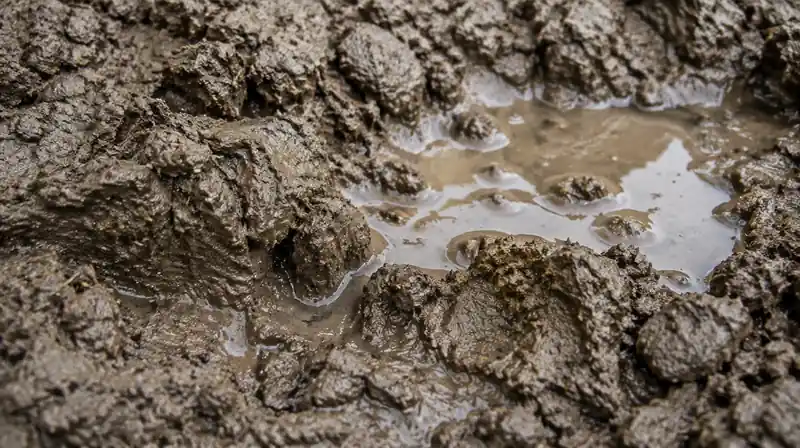
Perrysburg yards flood because the town sits on the old Great Black Swamp. The ground is dense clay that water can barely pass through, and the land is almost perfectly flat. Rain and snowmelt have nowhere to soak in and nowhere to run. So they sit on your lawn.
The good news is that this problem has a known fix. Farmers in Wood County solved it more than a century ago with drain tile. Homeowners can use the same idea today.
What was the Great Black Swamp?
The Great Black Swamp was a huge wetland that once covered much of northwest Ohio, including the land where Perrysburg, Maumee and much of Wood County now sit. It formed after the last ice age, when glacial lakes left behind flat beds of clay.
Water could not drain through that clay. So it stayed on the surface, year after year. The swamp was so wet and thick with mud that travelers avoided it.
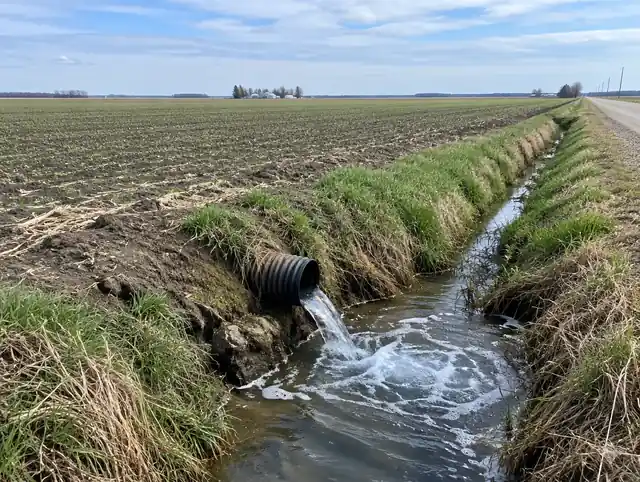
In the 1800s settlers began draining it with ditches and buried clay tile. That is how the swamp became farmland. Wood County is known for having some of the most underground drainage tile anywhere.
What kind of soil is under Perrysburg?
Much of the land around Perrysburg is a clay soil like the Hoytville series, which the USDA describes as very poorly drained. Here is what that means for your yard:
- It is made of clay from glacial till. Clay particles are tiny and pack tightly, so water moves through them very slowly.
- It sits on slopes of 0 to 1 percent. That is almost flat. Water does not run off.
- It often has a water table within about a foot of the surface from January to April. In spring, the ground is already full before the next rain arrives.
Put those three together and you get the classic Perrysburg spring: a soggy lawn, puddles that last for days and a sump pump that runs all the time.
Why new homes flood too
You might think newer homes in Perrysburg Township subdivisions would be safe. Often they are not.
- Fill soil settles. Builders bring in soil to level lots. Over a few years it settles and low spots form.
- Topsoil is thin. A few inches of topsoil sit on top of hard clay. Water soaks through the topsoil, hits the clay and spreads sideways.
- Swales between homes are shallow. On flat land there is little room to build slope.
- Downspouts dump close to the house. Roof water from a big new home is a lot of water.
Why older homes flood
Older homes near downtown Perrysburg and the Maumee River face different problems.
- Old clay drain tile fails. Many older homes had short clay tiles laid around the foundation. After decades they crack, shift or fill with silt.
- Grading has changed. Years of landscaping, sidewalks and additions change where water flows.
- Basements were not built for modern rain. Older foundations often have no waterproofing at all.
What does not work in Perrysburg clay
Some popular tips do little here. Save your money.
Drilling holes and filling them with gravel
In clay, a gravel filled hole just becomes a small bucket. It fills with water and stays full, because the clay around it will not drain.
Adding gypsum
Gypsum can help some clay soils that are high in sodium. Most Ohio clay does not have that problem. It will not fix a real drainage issue.
Adding sand to the topsoil
Mixing a little sand into clay can make it harder, like concrete. It does not help water drain.
Piling topsoil on low spots
New soil over a low spot often just moves the puddle a few feet over.
Clay soil drainage solutions that work
The fixes that work in Perrysburg all do one thing: give water a path out of the clay.
French drains
A French drain is a gravel trench with a perforated pipe. It collects water from the soggy soil and carries it to a safe outlet. It is the modern version of the farm tile that drained the Black Swamp. Learn about French drain installation.
Downspout and sump lines
Burying downspouts and sump discharge lines keeps a large amount of water from ever reaching the lawn near the house.
Catch basins
A catch basin collects surface water at the lowest point and pipes it away. It works well for puddles in one spot.
Grading
Shaping the ground to slope away from the house moves surface water before it soaks in. On flat lots even a small slope helps.
Rain gardens
A rain garden with deep rooted native plants can take in some water. In heavy clay it needs to be built with care, or it becomes a pond. It works best as a partner to a drain, not instead of one.
What about sandy areas like Holland and Whitehouse?
Not every nearby town sits on clay. West of Toledo lies the Oak Openings, a region of thick sandy soil left by old glacial lakes. In Holland and Whitehouse, yards can stay wet because the water table is high, not because the soil is tight. The fix is still a drain, but the design is different. Depth and the outlet matter more.
When to call a pro
Call a drainage contractor when:
- Puddles last more than a day after rain
- The lawn stays soft for weeks in spring
- Water shows up near your foundation or in the basement
- Your sump pump runs constantly
- DIY fixes have not worked
See our page on standing water in your yard for the full list of causes and fixes.
09
Frequently asked questions
How do I improve drainage in a clay soil lawn?
For mild problems, core aeration and adding compost to the topsoil help the lawn. For real pooling, the lawn needs a drain, a catch basin or better grading. Clay alone will not drain fast enough.
Does clay soil ever drain?
Yes, but slowly. In Perrysburg the clay drains so slowly, and the land is so flat, that spring water can sit for weeks without help.
Why is spring the worst time for yard water?
Because the soil is already full. From January to April the water table often sits close to the surface. Snowmelt and spring rain have no room to soak in.
What is the best time to install a French drain here?
Late summer and fall. The ground is drier and easier to dig, and the drain is ready before spring.
Get help with your clay soil yard
Perrysburg Drainage Pros fixes wet yards in Perrysburg and nearby towns. We start with a free drainage check and give you a clear plan and price.