Perrysburg Drainage Pros
Standing Water in Your Perrysburg Yard? Here Is How to Fix It
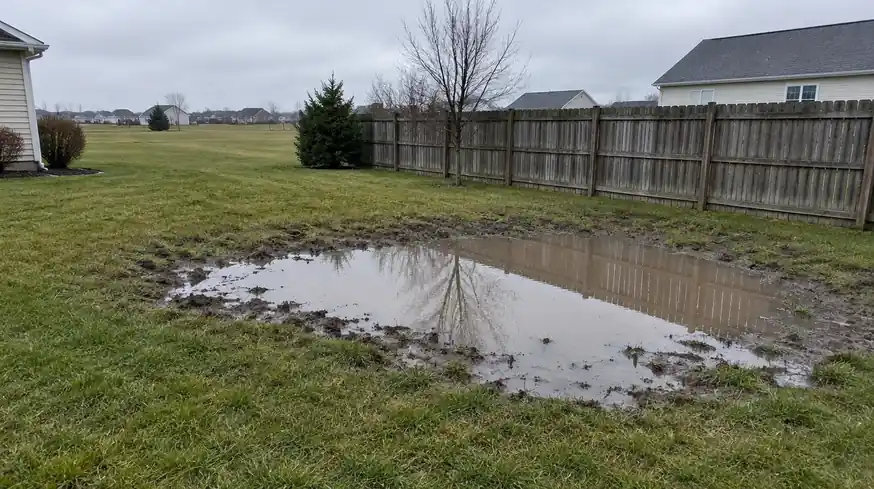
Standing water in a Perrysburg yard almost always comes from two things: heavy clay soil that will not soak up water, and flat ground that will not let it run off. The fix is to give the water a path out, with a French drain, a catch basin, new grading or a better downspout line. Perrysburg Drainage Pros finds the cause and fixes it so the water stops coming back.
01
Who do I call for standing water in my yard?
Call a yard drainage contractor. A lawn care company can treat the grass, and a plumber handles pipes inside the house. But neither one fixes where rain goes in your yard. A drainage contractor looks at the soil, the slope, the downspouts and the outlet, then builds a fix that moves the water.
02
Why does water pool in my yard after heavy rain?
Water pools because it has nowhere to go. In Perrysburg that usually means one or more of these:
- Clay soil. Our ground was once the Great Black Swamp. The clay is so tight that water sits on top instead of soaking in.
- Flat land. Most lots in Wood County have almost no natural slope. Rain spreads out and stays put.
- High water table in spring. From January to April the soil is often full of water near the surface. New rain has no room to go down.
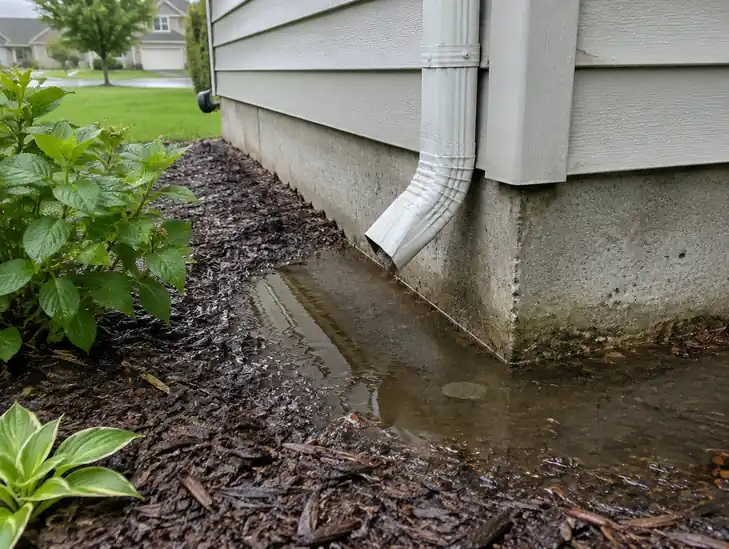
- Downspouts. Roof water dumps at the corner of the house and floods that side of the yard.
- Sump pump lines. A short discharge line sends basement water right back into the yard.
- Grading. New homes in Perrysburg Township subdivisions sometimes settle, and low spots form over time.
- A neighbor's yard. Water from a higher lot can run onto yours.
03
Is standing water in my yard dangerous?
It can be. Water that sits for days can cause real damage.
- Foundation and basement. Water near the house pushes against the walls and can leak into the basement.
- Mosquitoes. Still water gives mosquitoes a place to breed.
- Dead grass and trees. Roots drown in soil that stays wet.
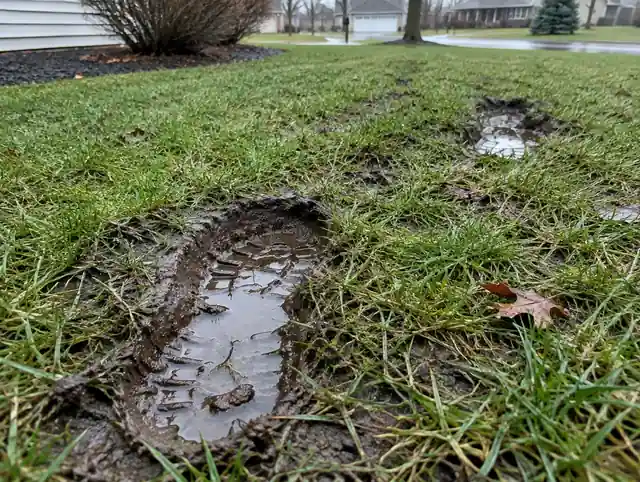
- Soft ground. Mowers sink, and kids and pets track mud inside.
- Erosion. Moving water carries soil away from beds and walkways.
If water stands near your foundation, do not wait. That is the most costly kind of yard water.
04
How to fix standing water in your yard
The right fix depends on where the water comes from. Here are the main options we use.
French drain
A gravel trench with a perforated pipe pulls water out of soggy ground and carries it away. It is the best fix when the soil stays wet and muddy. Learn about French drains.
Catch basin
A catch basin is a box with a grate set at the lowest spot. Surface water drops in and a pipe carries it off. It works well when water collects in one spot after rain.
Regrading
Regrading reshapes the ground so it slopes away from the house. It works when the yard tilts the wrong way or has sunken spots.
Downspout and sump lines
We connect downspouts and sump pump lines to buried pipe that carries water far from the house. This is often the cheapest fix with the biggest result.
Dry well
A dry well is a buried chamber that holds water and lets it soak in slowly. We use one when there is no lower spot to send the water.
Many Perrysburg yards need two of these together. For example, a French drain along a soggy strip and a downspout line on the same side of the house.
05
What not to do
Some quick fixes make the problem worse:
- Adding topsoil to low spots. New soil over clay often just moves the puddle.
- Sending water to the neighbor's yard. Ohio follows a "reasonable use" rule for surface water. Pushing water onto a neighbor can make you liable.
- Digging a hole and filling it with gravel. In clay, a gravel pit fills with water and stays full.
- Running a sump line into the lawn a few feet out. The water comes right back.
06
How much does it cost to fix standing water?
Small fixes like a downspout line can cost a few hundred dollars. A full French drain usually runs $2,400 to $4,700 in the Perrysburg area. See the details on our French drain cost page.
07
Our process
1
Free drainage check
We walk the yard, look at the wet spots and find the source.
2
Simple plan
You see what we will build, where the water will go and the price.
3
Call 811
We have buried lines marked through OHIO811 before any digging.
4
Install and test
We build the fix and run water through it to prove it works.
5
Clean up
We restore the lawn and leave the yard neat.
08
Frequently asked questions
Why is water coming up in my yard?
Water coming up from the ground usually means the soil is full. In spring the water table here can sit close to the surface. It can also be a broken water line or an old drain tile that collapsed. If it happens in dry weather, call your water utility first.
What soaks up water in the yard?
Plants with deep roots and a rain garden can soak up some water. But in Perrysburg clay, plants alone rarely fix a real pooling problem. The water needs a drain or a better slope.
Why does my yard retain water so much?
Your yard holds water because clay soil drains very slowly and the land is flat. Read our full guide on why Perrysburg yards flood.
How long should water stand in a yard after rain?
A healthy yard should drain within a day. If puddles last two days or more, the yard needs a drainage fix.
Can I fix standing water myself?
Simple fixes like extending a downspout are easy. Drains, catch basins and grading take planning, the right slope and a call to 811 before you dig.
Stop the water for good
Tell us where water sits in your yard and when it shows up. We will find the cause and give you a clear plan and price.